Improper use of a manual stacker can be very dangerous.
As a small warehouse forklift used for handling and stacking goods, the manual stacker (manufactured by stacker manufacturers) offers advantages such as small size, simple operation, and low cost. It is suitable for short‑distance handling of light goods. While a manual stacker possesses the benefits of a manual forklift, it must also be operated in strict accordance with its usage specifications.
Failure to thoroughly inspect the body and cylinder before use may result in the inability to lift goods or incomplete lifting. This is often caused by the pressure relief valve being adjusted too loosely or too tightly.
When using a manual stacker, attention must be paid to the sequence of forking goods. For example, after using the forks to pick up a pallet, the stacker needs to be moved a certain distance. The lifting height should not be too high; generally, the height above the ground should only be enough to allow the stacker to move without obstruction. If the lifting height is excessive, the center of gravity shifts upward, making the chassis unstable and prone to tipping, which in severe cases may cause personal injury.
When stacking goods with a manual stacker, do not exceed the rated load ratio; overloading may cause the vehicle to tip over. Therefore, attention should be paid to the load‑lifting ratio. Normally, the standard lifting height of a manual stacker is 1.6 m. If goods need to be stacked to 1.6 m, the load should be appropriately reduced relative to the rated capacity to ensure service life and safety.
Improper use of pallets is also dangerous. A pallet that is too large and does not match the fork size of the manual stacker can shift the load’s center of gravity, causing the load to turn over and leading to accidents. General electric forklift manufacturers mention that the pallets suitable for manual stackers are nine‑leg pallets or skid pallets, and the pallet dimensions should be clearly confirmed.
The mast of a manual stacker is made of standard channel steel and I‑beam, making the mast frame sturdy, safe, flexible, convenient, and labor‑saving.
The hydraulic cylinder of a manual stacker uses high‑precision honed tubes and an integrated valve core, which is easy to disassemble and repair. The pressure release is operated by foot pedal, providing stable lifting speed and significantly improved safety.
The manual stacker adopts advanced spray‑painting (powder coating) technology, which improves the product appearance and enhances durability. The stacker is equipped with adjustable forks; the fork width can be adjusted between 132 mm and 690 mm.
The manual stacker is a pollution‑free manual stacker featuring intelligent transport, flexible operation, and a small turning radius.
The manual stacker is suitable for use in production plants, workshops, warehouses, stations, docks, airports, and similar places. It is especially suitable for locations with fire‑ and explosion‑proof requirements, such as printing workshops, various oil depots, chemical warehouses, etc.
The manual stacker can be combined with pallet boxes and containers to achieve unitized transport. This not only reduces collisions and scratches but also decreases workload and stacking area, greatly improving work efficiency.
Recommended News
-
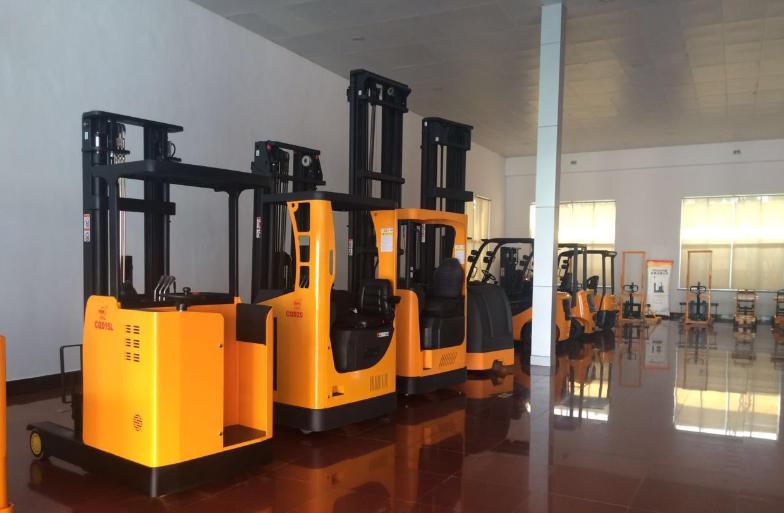
Improper use of a manual stacker can be very dangerous.
05/Jun -
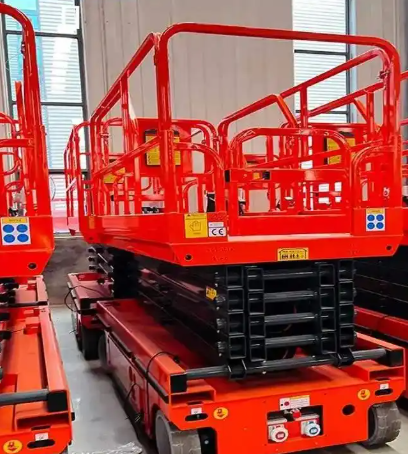
Maintenance Considerations for Fully Automatic Scissor Lifts
05/Jun -
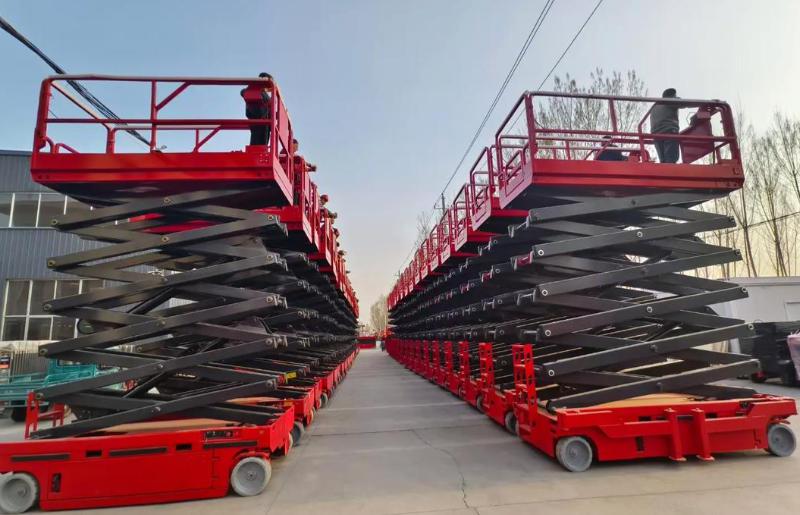
Scissor Lift Manufacturer: Basic Lift Knowledge
05/Jun -
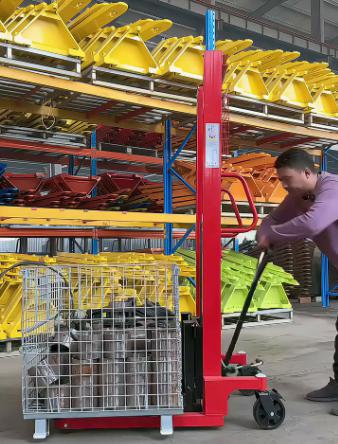
Which is more suitable, a manual stacker or a semi-electric stacker?
05/Jun -
Manufacturer's Analysis of Scissor Lift Structure
05/Jun