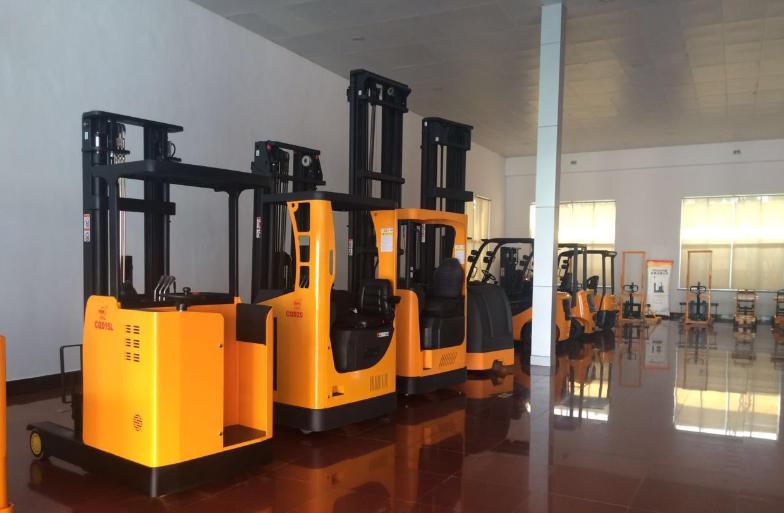
Which is more suitable, a manual stacker or a semi-electric stacker?
Although manual stackers and semi-electric stackers belong to the same category of forklifts, they have different functions:
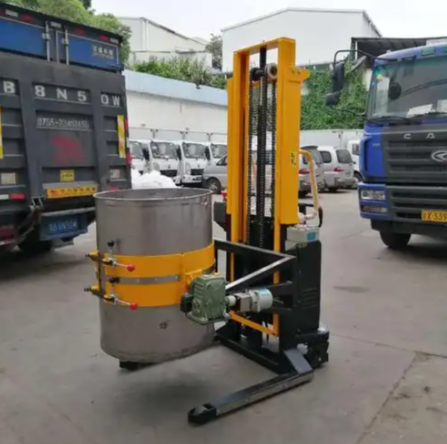
Vehicle configuration: Manual stackers use a manual hydraulic device, while semi-electric stackers have multiple configurations. The main components of a semi-electric stacker include: battery, motor, hydraulic power unit, counterweight, controller, circuit board, sensor, and other devices.
Battery capacity: Currently, the continuous working time of an ordinary semi-electric stacker is about 3–6 hours, depending on the specific model and specification. Generally, the larger the battery capacity, the longer the battery life.
Equipment issues: Semi-electric stackers have no drive unit; they are equipped only with a few basic load wheels and steering wheels.
Application range: The main function of a semi-electric stacker is lifting, and it is mainly used for loading/unloading, warehouse stacking, high‑level order picking, and other operations that require only small‑area movement. Manual stackers are mainly used for handling and stacking light goods in small areas where the budget is limited and work intensity is low.
Comparison of advantages and disadvantages between manual stackers and semi-electric stackers (from manufacturer's perspective):
Semi-electric stacker: Simple to operate, low price, wide application range, easy to maintain, low requirements for aisle width, low turning radius requirement, and more flexible turning.
Manual stacker: Since it is manually operated, there is no strict limit on continuous working time. The main limitation is human effort. Therefore, manual stackers are not suitable for locations with heavy workloads or high‑intensity requirements. A semi-electric stacker is more than five times more efficient than a manual stacker, with simple operation and low labor intensity for the operator.
A semi-electric stacker is manually pushed/pulled for travel, while lifting is electric. It is suitable for short‑distance transportation in factories, warehouses, logistics enterprises, and for loading/unloading in low‑load areas. Maintenance of a semi-electric stacker is relatively simple. How to charge the battery of a semi-electric stacker? Let's understand from the following points:
The charging environment for a semi-electric hydraulic stacker should be clean and well‑ventilated. If possible, remove the battery or open the cover of the semi-electric stacker.
The electrolyte level in the semi-electric stacker should be at least 15 mm above the separator. If the level is below this mark, refill with electrolyte in time to prevent battery capacity loss and to protect the battery life of the semi-electric stacker. In addition, the electrolyte temperature should not exceed 45°C during charging.
Do not expose the semi-electric stacker to open flames while charging, because the battery generates a large amount of flammable gas during charging. Thus, prevent fire hazards during charging.
Avoid skin contact with acid during charging. If contact occurs, use plenty of soapy water or consult a doctor.
The battery should normally be kept clean and dry. No other objects should be placed on the battery of the semi-electric hydraulic stacker.